100+ Journalists Applaud the Internet Archive’s Role In Preserving the Public Record
Rachel Maddow declares the Archive a “national treasure” as uncertainty mounts on whether today’s journalism will be preserved for future generations.
Photos by Kenyatta Thomas
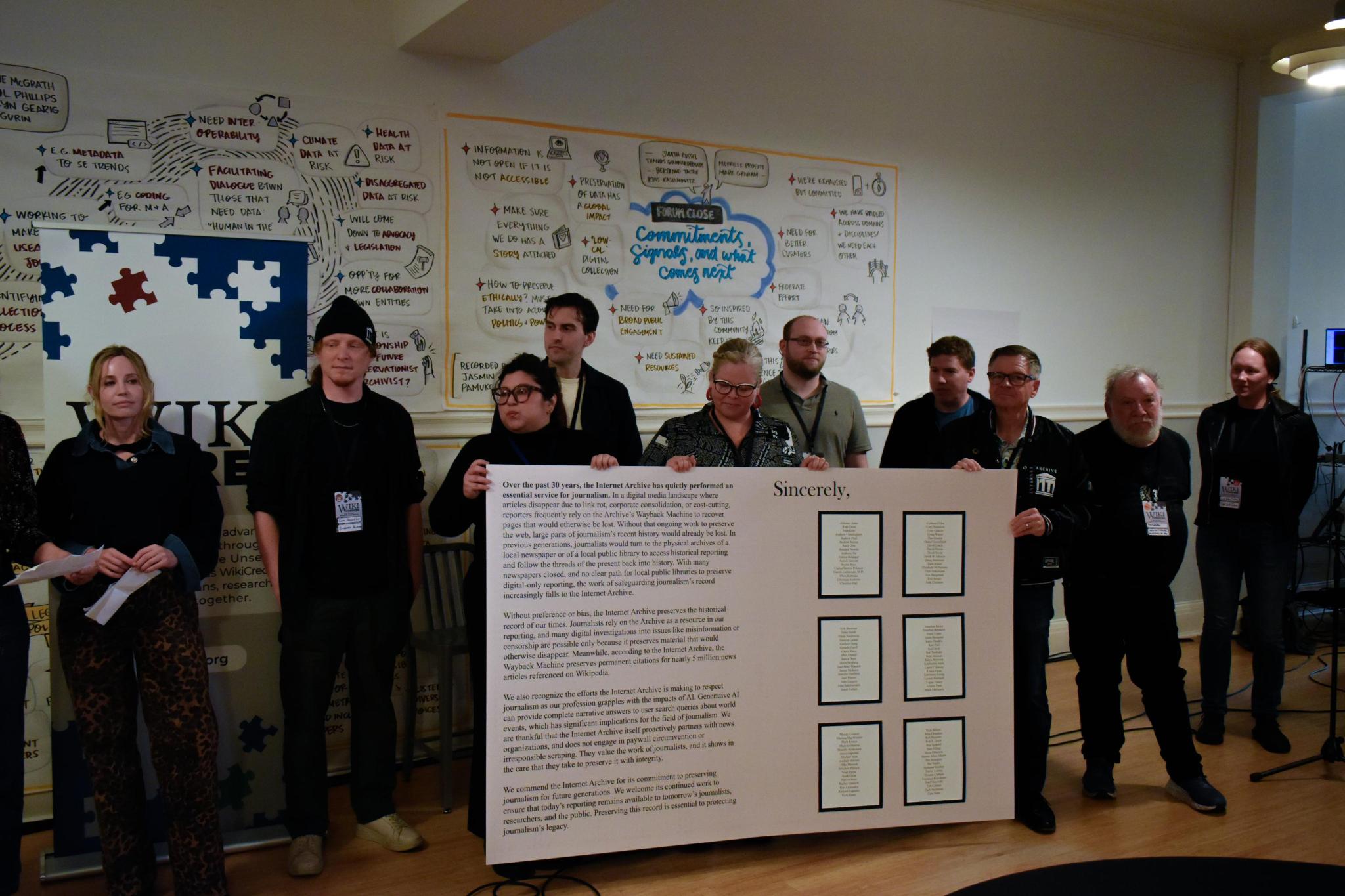
Over 100 journalists including Rachel Maddow, Cory Doctorow, and Ellen Nakashima have signed a letter to the Internet Archive celebrating the Wayback Machine as a crucial resource for their work.
The letter reads in part:
“We are thankful that the Internet Archive itself proactively partners with news organizations, and does not engage in paywall circumvention or irresponsible scraping. They value the work of journalists, and it shows in the care that they take to preserve it with integrity.
We commend the Internet Archive for its commitment to preserving journalism for future generations. We welcome its continued work to ensure that today’s reporting remains available to tomorrow’s journalists, researchers, and the public. Preserving this record is essential to protecting journalism’s legacy.”
The full text, list of signatories, and link for journalists to sign on digitally is available at https://www.savethearchive.com/journalists/
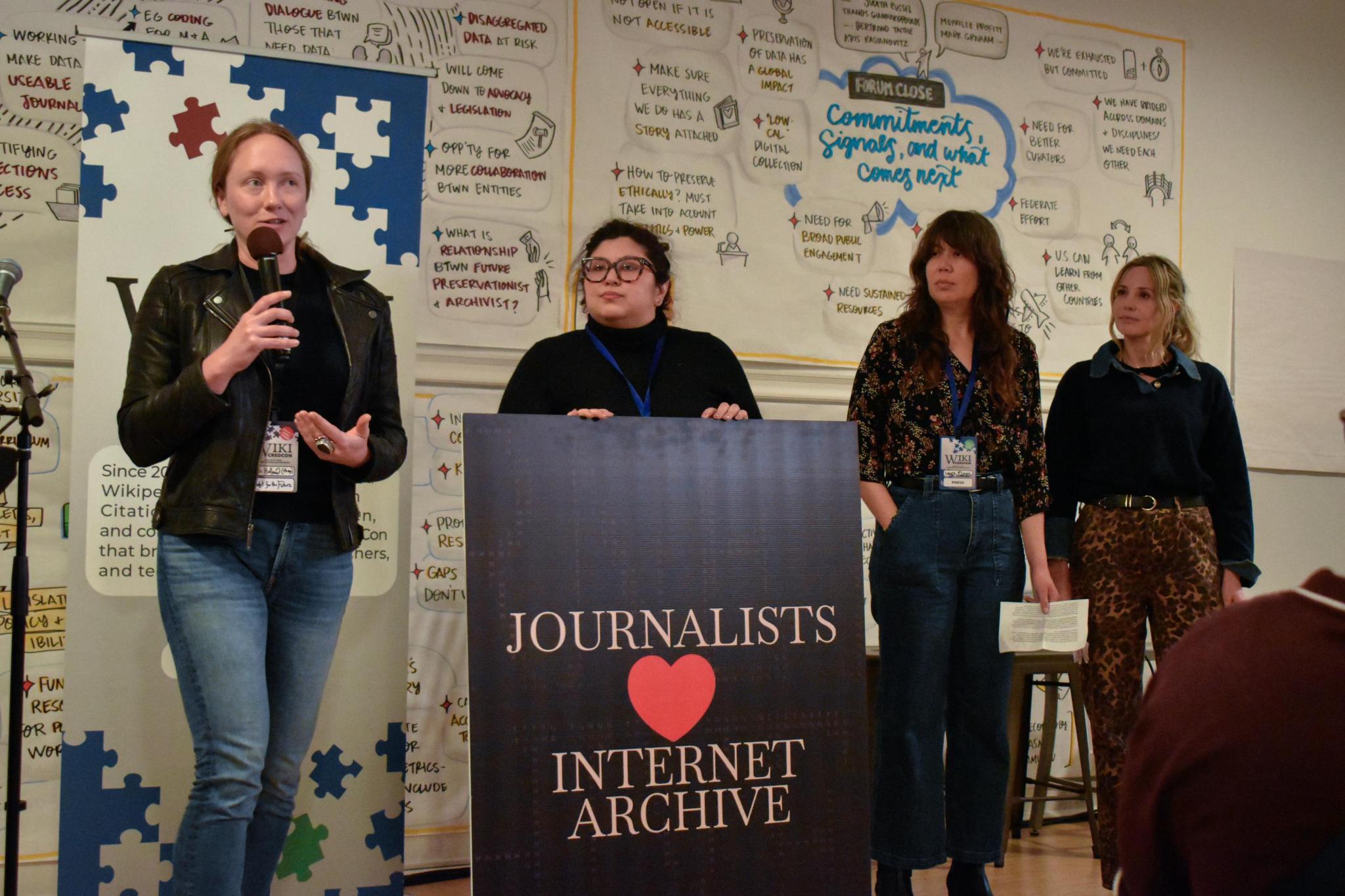
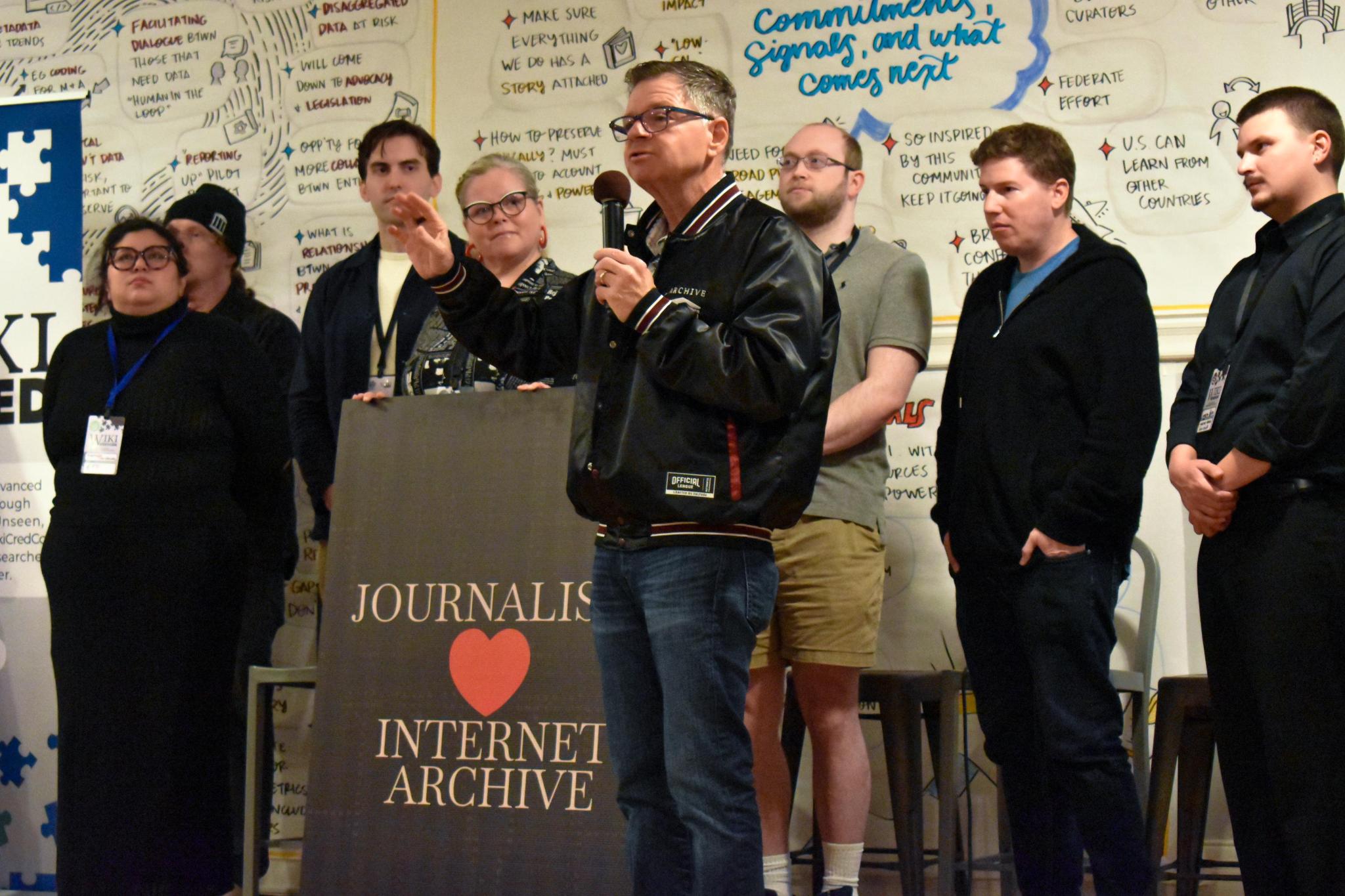
The letter comes as major media outlets like the New York Times are asking the Internet Archive to cease its preservation of the news. It was delivered to Internet Archive staff on stage at WikiCredCon, an annual Wikipedia event, by journalist-signatories Laura Flynn and Zara Stone alongside members of tech justice organizations Fight for the Future and Electronic Frontier Foundation. WikiCredCon’s 2026 theme was “Addressing Reliability in an Era of Information Erosion.” According to Archive staff, the Wayback Machine preserves permanent citations for nearly 5 million news article references on Wikipedia.
Lia Holland (they/she), Campaigns and Communications Director at Fight for the Future, which led the letter effort, said: “ It would be a crying shame if this brief moment we are in with AI scraping led to the demise of one of one of journalism’s greatest tools across the past 30 years. All journalists benefit from the Internet Archive’s archiving of the web. It is a tool for accountability, research, and preservation the world over that serves everyone in the field, from Pulitzer Prize winners to student journalists. We cannot let the shortsighted pursuit of profit or AI training exclusivity strangle this irreplaceable resource. It’s important for journalists to speak up now and defend the archive.”
Rachel Maddow said: “The Internet Archive is a national treasure. I use it daily, and have for many, many years. I cannot imagine doing the work I do without it.”
Michael Alex, former editor of MTV News, said: “The Internet Archive preserves over two decades of original reporting on music and popular culture by MTV News. For any journalist covering the music, popular culture and trends of interest to young people (and young-minded people) the Archive is a critical resource. History needs stewards. The people of the Internet Archive do an outstanding job of preserving irreplaceable work and making it available to journalists and researchers.”
Stu Neatby at the Charlottetown Guardian said: “Wayback machine is an essential tool for local journalists. Local and state/provincial governments regularly scrub pages with critical information, with no regard for archiving. Other than Wayback, the only other option would be to go through the FOIPP system which would waste the time of both journalists and public officials.”
Ashley Belanger at Ars Technica said: “As a tech policy journalist, I use the Internet Archive constantly to compare old versions of websites, TOS, or government documents. Without IA, it would be so much harder to trace histories online.”
Kat Tenbarge at Spitfire News said: “Some of my investigative reporting would not have been possible without the Internet Archive. I’ve used the Wayback Machine to visit archived webpages from more than a decade ago, some of which helped corroborate serious allegations. I use the Wayback Machine regularly to figure out how many followers someone had at a given time, to resurface since-deleted material, and to find context for historical posts. It is an essential resource for internet culture journalism and beyond.”