

How we Fight for the Future in 2026
Confronting techno-fascism with fearless activism that actually works
It’s deadly to downplay it. We are in a pitched battle between fascism and freedom. Fight for the Future is meeting the moment with our Internet-savvy blend of attention-grabbing activism and mass mobilization. We’ve been laser focused on beating back authoritarian censorship and surveillance so that frontline organizers and mass resistance movements have the tools and spaces they need to fight back against the regime and win.
It’s an uphill battle, but Fight for the Future will never take the easy way out. We’ll never compromise our values or tone down our messaging to gain access, appease billionaires or avoid controversy. But our fearless activism is only possible because thousands of individual people support us with small monthly donations and year-end gifts. Please consider making a donation today.
The fascists are winning. But they haven’t won.
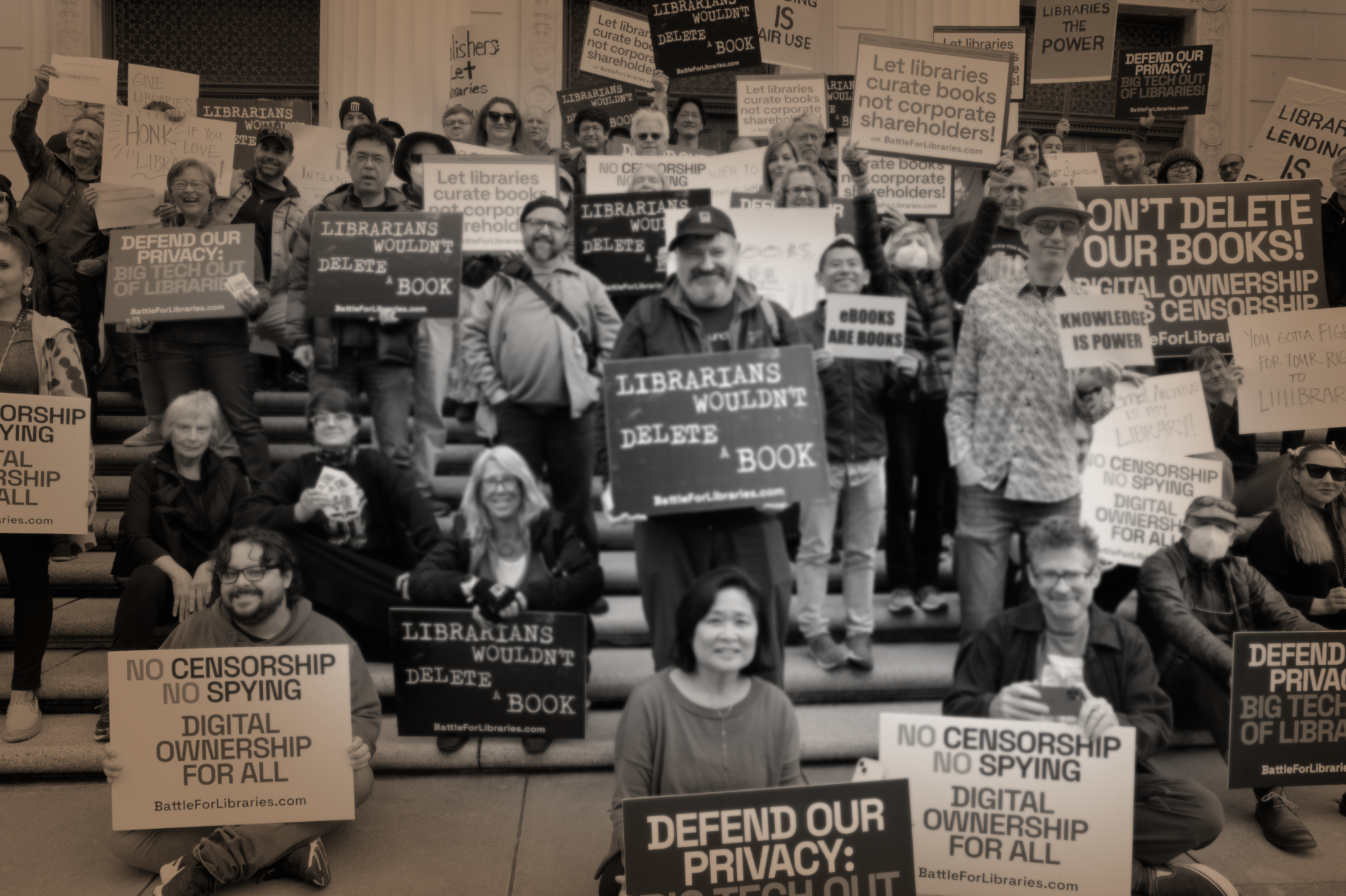
MEETING THE MOMENT
Protect frontline organizers defending democracy
from facial recognition, license-place scanners, and other surveillance tech deployed by ICE, other law enforcement organizations, and corporations that share their data with government
Architect powerful campaigns to interrupt the expansion of state censorship
in order to defend vulnerable groups and content online, like LGBTQ+ communities, abortion resources, and political organizing hubs
Give power back to the people in advance of the 2026 election
by ensuring that trustworthy sources remain accessible and unrestricted, and that autocratic tactics to chill participation meet roaring resistance
Defend decentralized and privacy-preserving technologies
including end-to-end encryption, blockchain, and other alternatives to Big Tech so that activists, immigrants, journalists, and others have safe ways to connect and share information
This Year We Will
Grow our coalition against censorship by unveiling “Parents Against Censorship”
In order to stop the Bad Internet Bills that propose censorship as the solution to online safety, we need to build powerful and principled groups that oppose censorship—full stop. We’ll kick off in 2026 with “Parents Against Censorship,” a parent-run project that will debunk the specious argument that keeping kids away from information makes them safer, while fighting to ensure young people (and everyone) can keep using the internet to connect and learn.
Resist the spread of harmful AI in healthcare
From relying on biased data to inform life-or-death decisions to cost saving measures where nurses are fired and replaced by computers, the potential harms of Artificial Intelligence use in healthcare are too significant to allow politicians and hospitals to move forward without guardrails. We’ll work with patients, nurses, and doctors to pressure decision-makers to protect real people, and expose top-down AI mandates for what they really are: wastes of energy and resources that erase accountability, reinforce biases, and disempower ordinary people.
Block the spread of license-plate scanning surveillance
Automated License Plate Readers (ALPRs) have been installed throughout our communities and can track everywhere people drive, which is putting immigrants, abortion seekers, and protesters in real danger. We’re partnering with local activists to fight city contracts with companies like Flock, and will empower federal champions to call for a nation-wide ban on license-plate scanners.
Fight the spread of age verification and anti-VPN bills to defend privacy online
The true path to safety for all Internet users is strong privacy protections and antitrust measures to break up Big Tech monopolies. But across the political spectrum, lawmakers are using the guise of keeping kids safe online to push forward bills that make everyone less-safe, while keeping tech companies rich and powerful. The dream of a free and open internet does not include walled off or censored information or surveillance. We’ve already built up a legion of activists who are with us, and together we’ll continue to organize against state and federal online ID checks and VPN bans.
Defend decentralized, privacy-preserving technologies for frontline fighters
The spread of fascism under Trump and his cronies has been met with protests, grassroots action, and lifesaving community-based mutual aid networks. These groups are relying on a variety of tools to communicate, raise money, organize protests, and share information, the more privacy-preserving, the better. We’re committed to fighting for end-to-end encryption as well as the decentralized and anonymized technologies that will support folks fighting on the front lines.
Support more organizations to be less reliant on centralized, Big Tech services
Fight for the Future has always preferred open source, self-hosted tools for activism and organizational operations, and our highly-skilled developers have constantly pushed us to try new things and improve our systems. Just this year we “de-Googled” our email, calendar, and document management tools, and have built out and tested other non-Big Tech tools. In the current political environment, this work is critical, which is why we’re expanding our “share our playbook” mentality to help more activists and organizations move to tech that doesn’t rely on surveillance business models or prop up censorship regimes. We’ll be presenting our learnings at conferences, offering our hosted open source tools for activism and operations, and finding more ways to help groups fighting Big Tech to get off the platforms they own.
2025 Victories
In 2025 we…
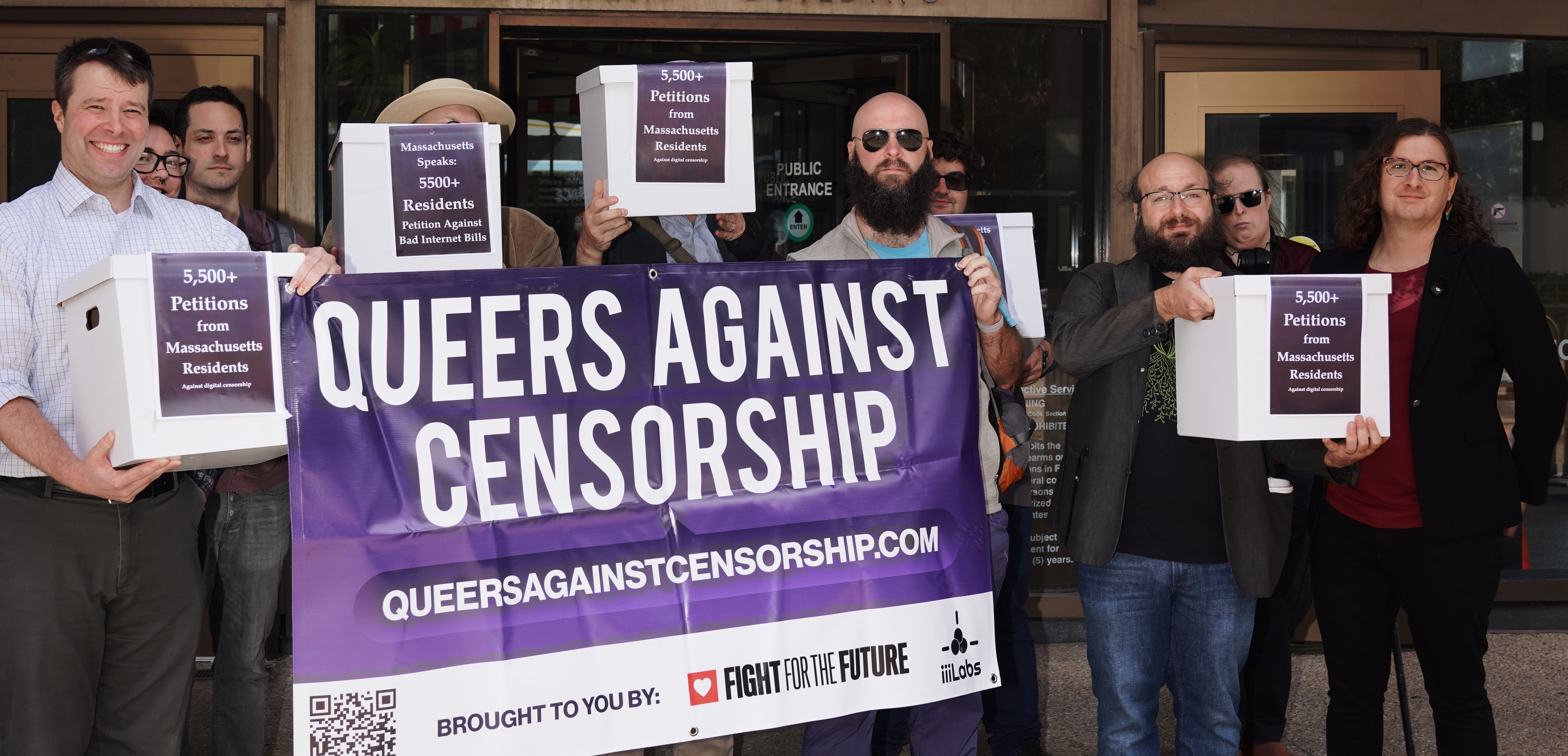
Staved off dangerous online censorship legislation like KOSA
This year we continued to mobilize queer communities, parents and youth to hold lawmakers accountable for supporting censorship bills and other harmful legislation, including online ID mandates and the Kids Online Safety Act (KOSA). As stated in our open letter signed by a coalition of over two thousand LGBTQ+ activists, prominent artists and creators, “there is no longer any doubt that these bills would be used to surveil, silence, and isolate our communities.
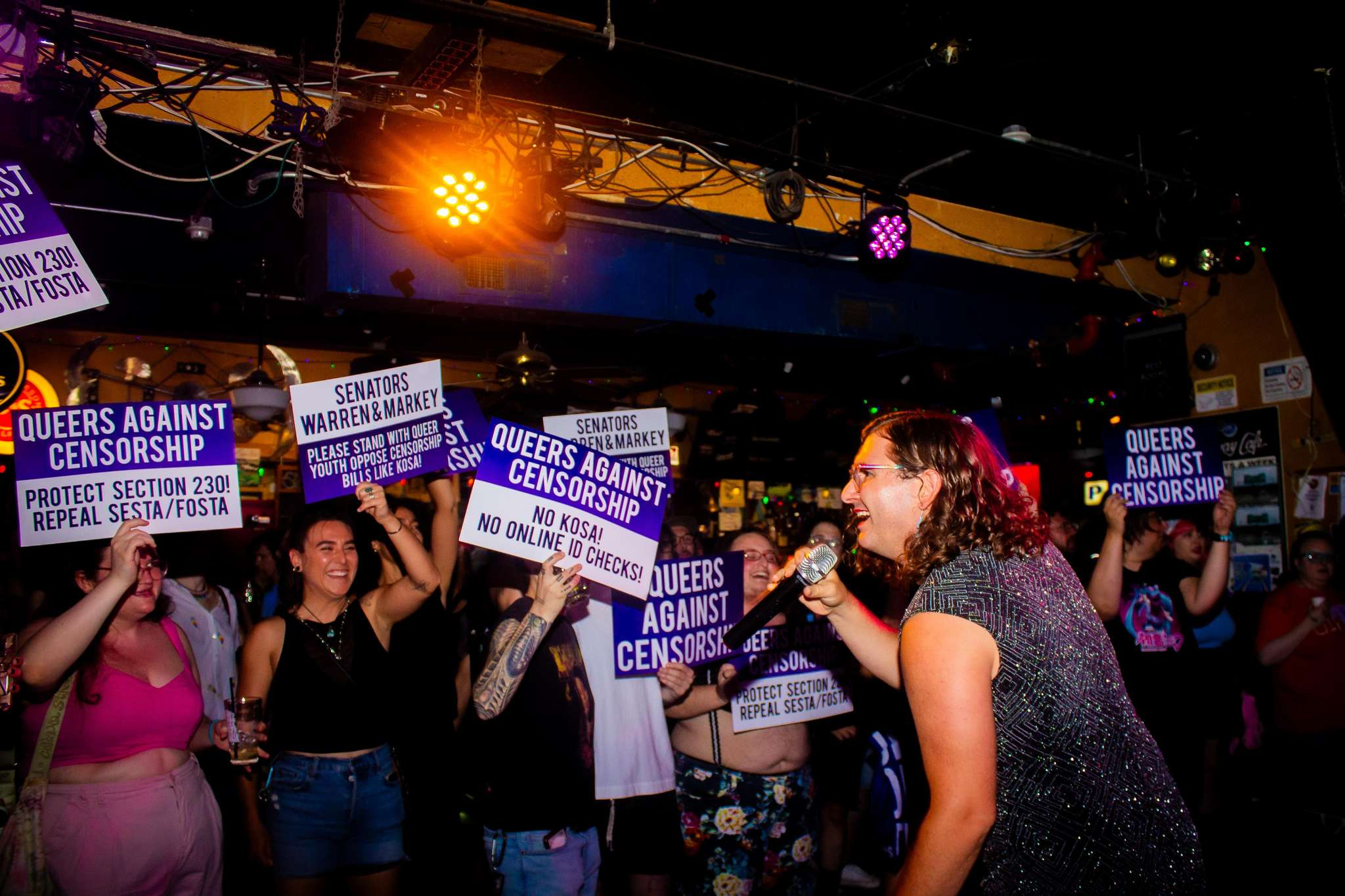
Along these lines, we launched a new flagship campaign, Queers Against Censorship, which is working to influence power at the state level. Our Massachusetts contingent organized a queer karaoke night to urge lawmakers to publicly oppose KOSA, online ID checks, and misguided rollbacks to Section 230 that would suppress lifesaving online resources for queer and trans youth. We also urged local elected officials to safeguard access to vital online support for LGBTQIA+ and other marginalized communities.
A safe, free, just, and open Internet relies on free expression and comprehensive privacy protections. Our work this year reinforced the idea that censorship is not a solution—it is urgent danger that must be actively resisted.
Brought national media attention to creeping campus surveillance
We united a coalition of 30 leading rights organizations, including Amnesty International USA, the Center for Constitutional Rights, Access Now, the Electronic Frontier Foundation, and the Electronic Privacy Information Center (EPIC), to demand that administrators at 60 major U.S. universities end campus surveillance and dismantle invasive data collection systems. To hold these institutions accountable, we partnered with COVID Safe Campus to launch a campus mask policy scorecard. There, CSC’s research highlights how mask bans are being weaponized as tools of oppression, undermining public health, privacy, free expression, and First Amendment rights. We mobilized students, faculty, and disability justice communities to challenge policy, resist mask bans, and expose how, in combination with universities’ expansive camera networks and facial recognition systems, their campuses are complicit in doxxing, stalking, and the suppression of dissent.
Fought misguided online ID checks and called out the platforms pre-complying with these censorship policies
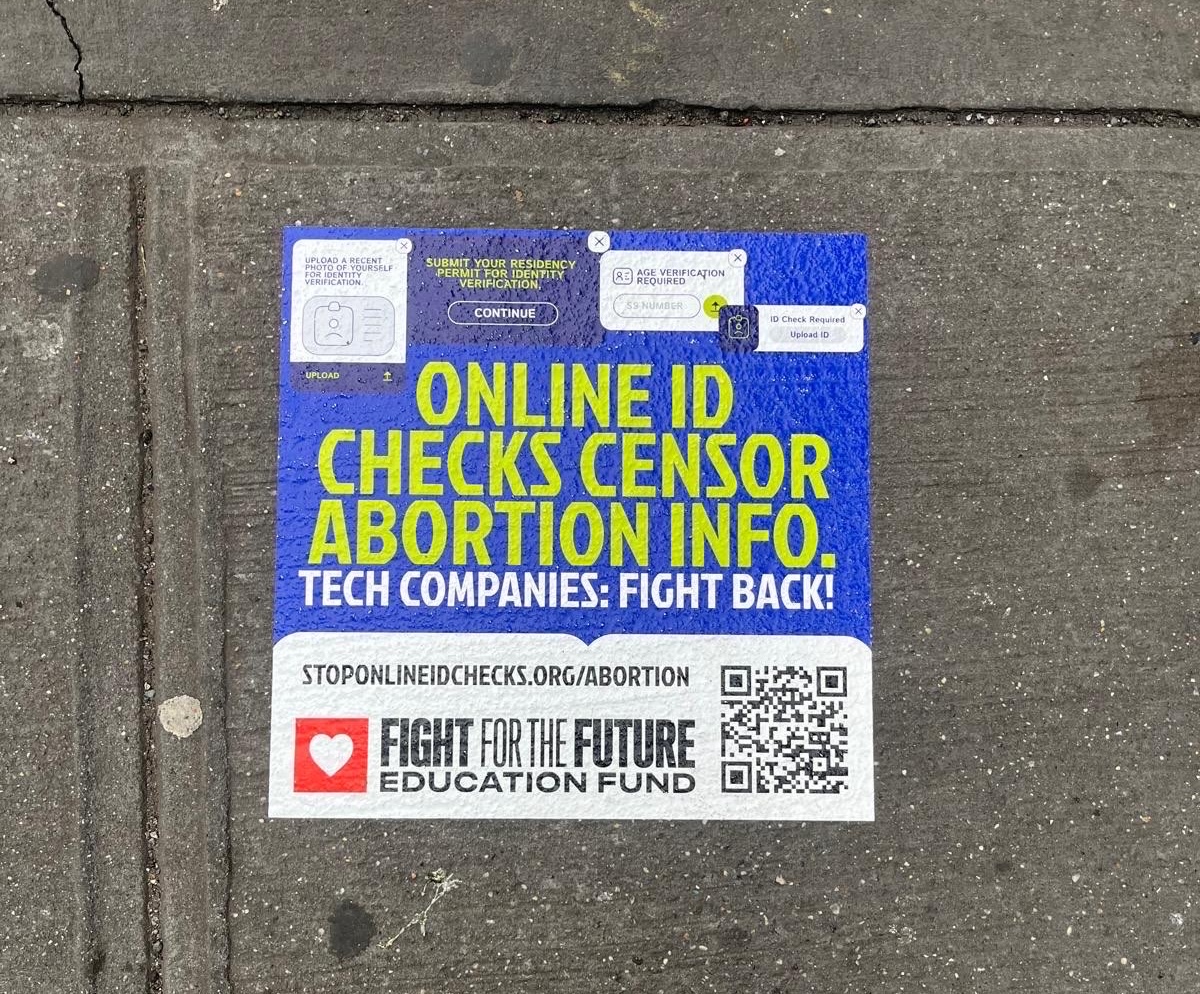
As online ID check bills have gained traction across the US and globally, we’ve been sounding the alarm. All year we’ve worked to halt their spread and explain to communities and lawmakers how these checkpoints threaten privacy and free expression and wall off or censor vital access to community and resources. We want to make clear that such misguided attempts to age-gate are a danger to everyone, whether 16 or 60—especially under the current administration.
To fight, we built out a huge coalition of nearly a hundred groups and released an open letter calling on lawmakers to invest in child safety without sacrificing digital privacy, freedom of information, or the very usability of the Internet. Our campaign has since become a central hub for a year of viral actions.
When members of Congress introduced 19 so called “online safety bills,” many of them focused on age-verification laws, we drove thousands of calls to offices, organized webinars and Reddit AMAs, and livestreamed committee hearings. During these hearings we actually grew hopeful—there was a real, substantive discussion of the censorship and surveillance threats that a number of the bills proposed represent. This is proof that coalition organizing and the voices of young activists are beginning to break through. And while unfortunately multiple states have already implemented these invasive checks, we are building a powerful oppositional force. Next year we’ll go even harder.
Provided digital hygiene tools and campaign support to frontline organizers, from abortion funds to anti-ICE demonstrators
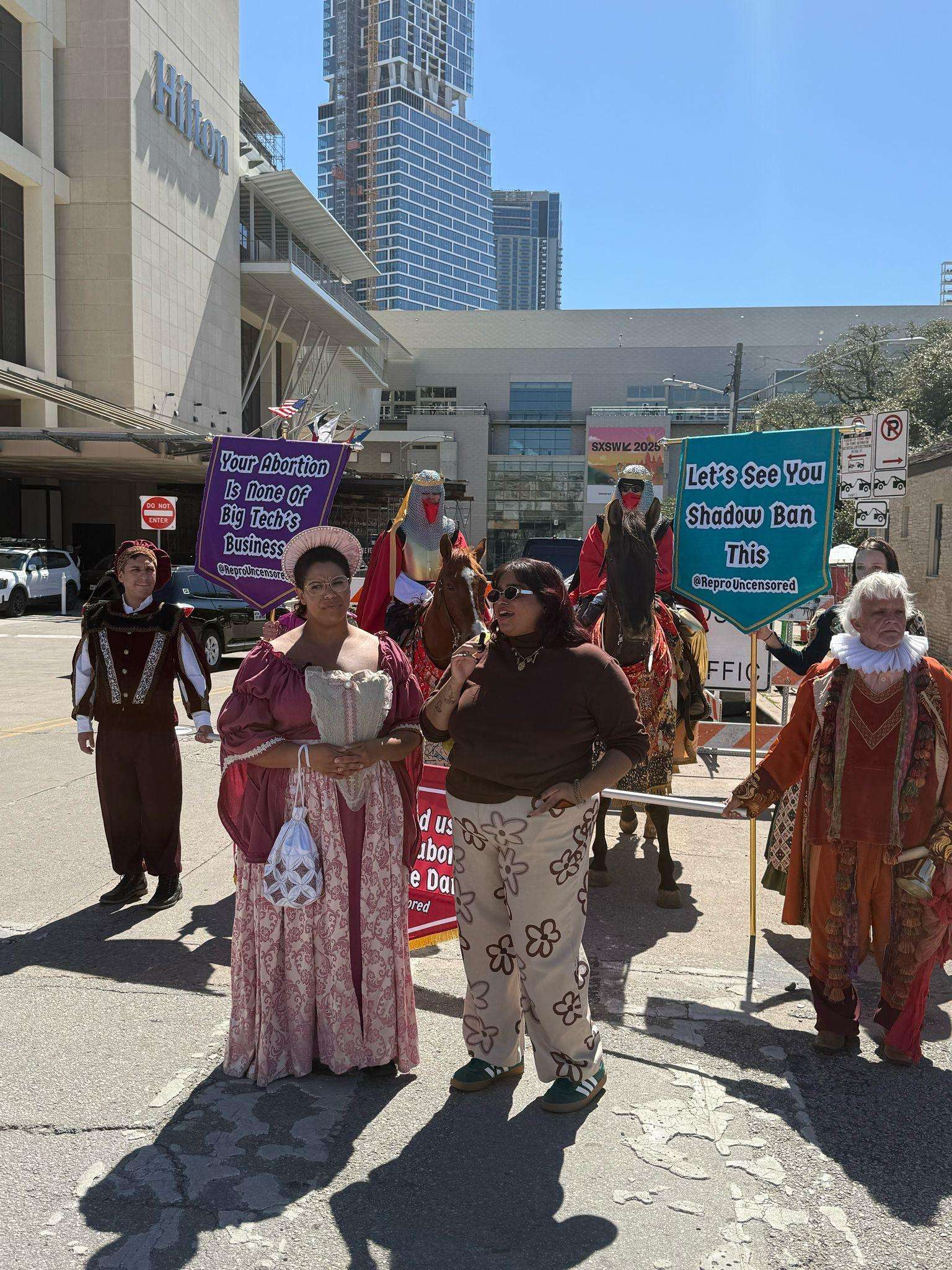
As threats against immigrants, protesters, and organizers grow, Fight is amplifying existing tools and developing new ones to safeguard their rights and their privacy. We have advised federal workers on digital security, provided visibility and support for organizers protesting against DOGE, and collaborated with community-driven campaigns against Flock in cities like Oakland. Throughout this long, difficult year we have produced and distributed resources including an extensive human rights messaging toolkit for challenging surveillance narratives, a VPN privacy toolkit, a widely disseminated “friendly neighborhood hacker” series of security guides, a viral anti-Ring Halloween door hanger, and action maps to join local anti-mask ban fights. For mutual aid organizations, we provided security basic and resources, helped coordinate risk assessments, and pushed for the development of financial privacy tools to keep groups like abortion and bail funds safe. With Repro Uncensored Collective and Electronic Frontier Foundation (EFF), we launched Report an Incident, a site that documents the experiences of organizations and communities that have faced abortion censorship in order to best fight back against this suppression. Fight’s director Evan Greer has also been spreading joy and the digital security gospel through her widely circulated musical PSAs.
Reached millions with campaigns targeting surveillance tech behemoths like Amazon Ring and Flock
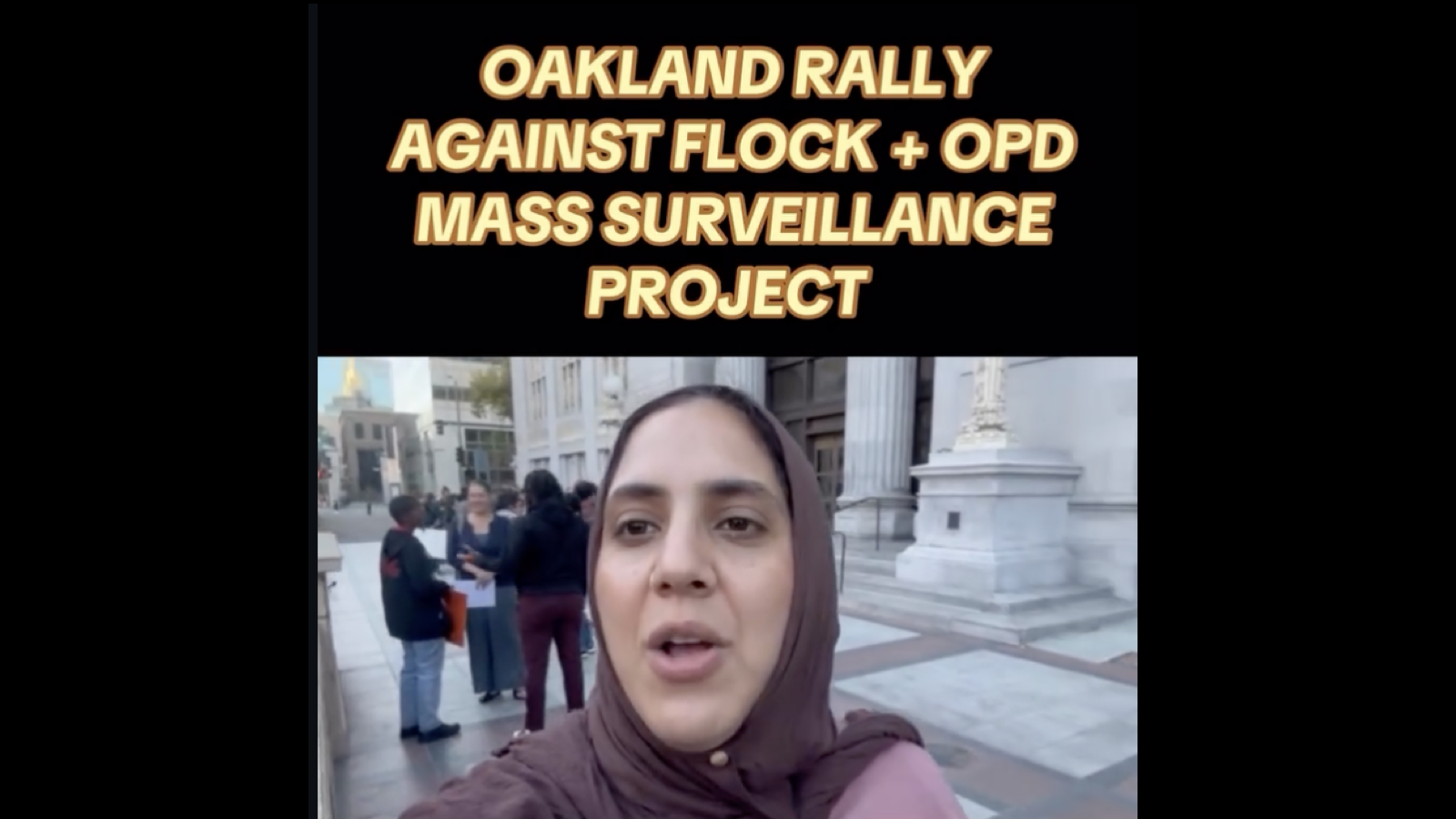
We launched a national campaign against Flock, the private surveillance company responsible for 80,000+ AI-powered automatic license plate readers (ALPRs) in communities across the U.S. These surveillance devices give police and federal agents, including border patrol, the ability to track and trace anyone who drives a car. As communities fight back, we are working in coalition to provide teach-ins, coordination, and social media and press amplification to support campaigns in cities like Oakland that are successfully turning the tide against Flock and other ALPRs. Our demand of lawmakers at the city, state, and federal levels is to address CBP’s and others’ illegal access to this surveillance network and to ban AI surveillance tech.
Our viral Halloween action “No Ring for ICE” warned communities about the partnership between Amazon Ring, Flock, and ICE, and urged people to disable or remove their Ring cameras to protect immigrant families and activists, or to at least activate end-to-end encryption on Ring cameras to prevent the sharing of their data. We continue to call on all community members, individuals and businesses to turn off and remove these dangerous cameras.
We have also pushed back against corporate compliance with authoritarian demands. This year, we challenged Apple and Google for their attacks on user’s rights and their willingness to block apps like RedDot and ICEblock, which help communities report ICE sightings, as well as Eyes Up, which preserves video of ICE abuses which can be used in court.
Organized the largest ever day of action to defend VPNs as a basic privacy tool

When bills threatening VPN use began to emerge, we organized a VPN Day of Action and developed a comprehensive \ toolkit to help people defend their digital rights. We swiftly united major providers and privacy advocates, including Windscribe, the VPN Trust Initiative, NordVPN, Surfshark, ExpressVPN, and the VPN Guild, and organized to launch a coordinated campaign. In a single day, we gathered over 15,000 signatures; by the end of the week, that number had reached 25,000.
Technologies like VPNs are crucial to protecting privacy, human rights and online safety. They help organizers circumvent censorship and surveillance and protect sources, locations, and online identities. Any restriction or ban on their use would have a chilling effect on internet freedom, particularly for marginalized communities. For more information on how authoritarian and pro-surveillance governments are trying to ban VPNs, and why these tools remain essential for protecting everyday people’s rights, listen to Taylor Lorenz’s excellent interview with Fight’s Lia Holland.
Mobilized mutual aid organizations to oppose financial surveillance and push for alternatives to apps like Venmo and PayPal
By challenging financial censorship and surveillance, we help protect the economic lifeline of mutual aid funds and movement organizations. We have consistently called out payment processors (banks, credit card companies, PayPal, Venmo, etc) that try to deplatform or block mutual aid networks , while pushing the developer community to build better tools. This past year commissioned a report, “Financial Confidentiality in the Age of Digital Surveillance,” auditing the privacy-preserving solutions exist for justice organizations. Then we put into action: In collaboration with the UC Berkeley Cybersecurity Clinic, we invited mutual aid networks to participate in a case study that provided pro bono risk assessments. The study helped pinpoint these organizations’ needs to accelerate the development of pro-privacy alternatives.
Called out Spotify’s whack business practices and supported users and artists in a boycott
When Spotify Wrapped splashed across social media pages, we launched its antidote, Spotify Whacked, which called out the platform for its complicity in human rights abuses, its creepy surveillance, and its ongoing exploitation of artists and users. Spotify has repeatedly come under fire for everything from paying artists virtually nothing, to employing a “modern form of payola,” to pushing AI-generated slop at its listeners. They have also supported ICE abuses by running agency recruitment ads, and its former CEO Daniel Ek has used the company’s profits to invest in AI military drones and surveillance tech. Joining fellow activists in exposing the company’s shadowy practices, Spotify Whacked also calls on listeners, musicians, and labels to boycott Spotify as their News Year’s resolution. Additionally, the campaign, which has been covered in press from Vice, the SF Chronicle, and more, provides ethical alternative music apps and platforms that have proven track records of paying and playing fair.
Campaigns by the Numbers
Our most successful campaigns and victories are only possible because we’re able to engage millions of people and get folks to take action. Here are some stats from our 2025 campaigns.
- 28 Campaign pages launched in 2025
- 19,767 Calls in 2025
- 83,800 Actions taken
- 515 Organizations and artists signed coalition letters
- 4 Billboards commissioned
Top Press
Press coverage of our campaigns is a key tactic for reaching more people and putting pressure on critical targets. This year we were featured in dozens of outlets, with hundreds of press hits. Here are some of the top articles:
- Some Democrats Are Helping the Trump Admin’s Anti-LGBTQ+ Tech Agenda
Teen Vogue
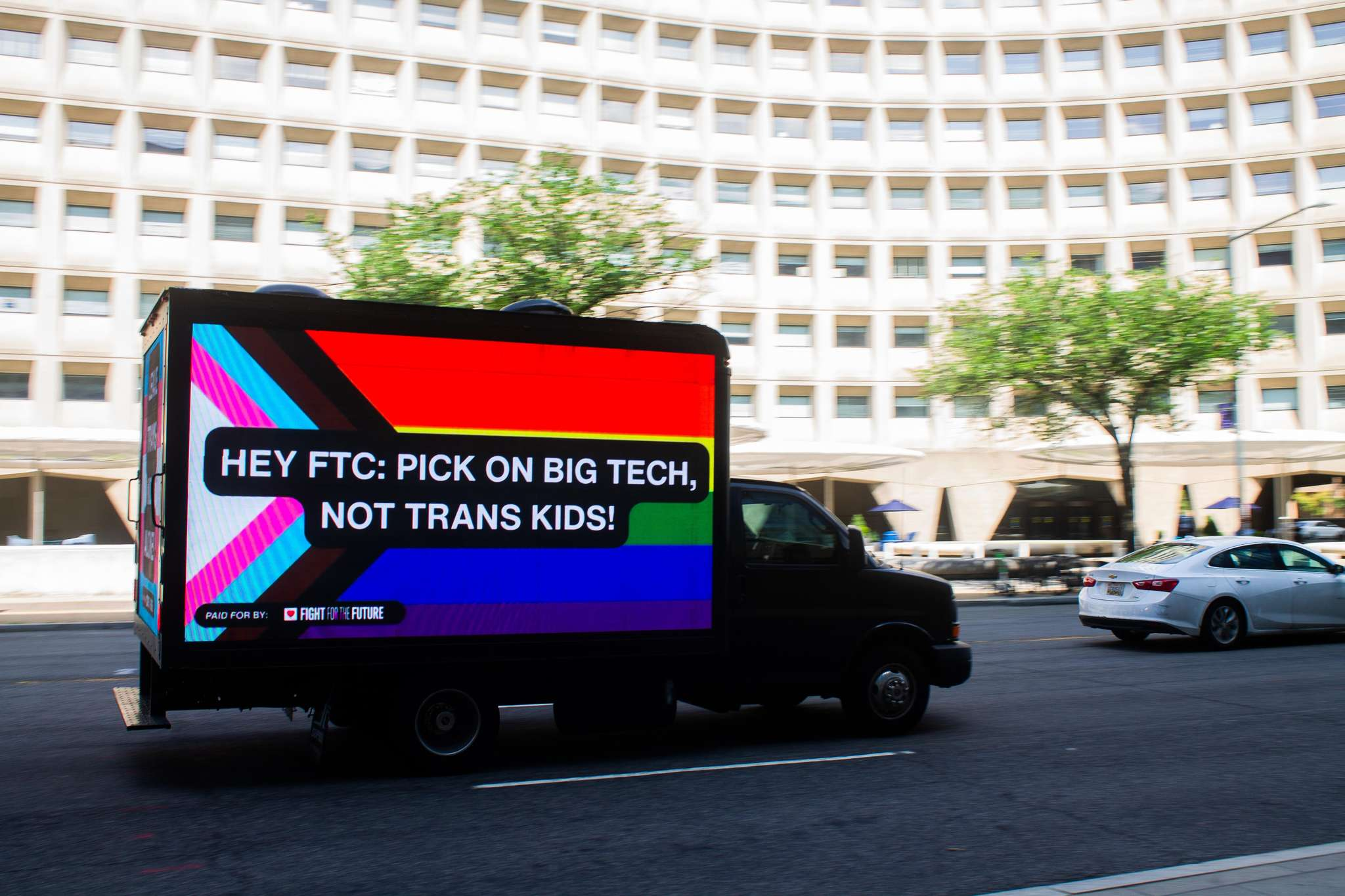
October 23, 2025 - Blumenthal’s KOSA faces pushback from LGBTQ group, via truck
CT Mirror
June 17, 2025 - These groups are pushing for the NFL to end facial recognition
Fast Company
February 7, 2025 - Privacy and civil rights groups urge US colleges to end campus surveillance to protect protesters
AP News
August 21, 2025 - Are VPNs Under Attack? An Anti-Censorship Group Speaks Out
CNet
Oct. 5, 2025 - The Kids Online Safety Act is back, with the potential to change the internet
Tech Crunch
May 14, 2025 - A contentious kids safety bill might be getting gutted — and nobody’s happy
The Verge
Oct 31, 2025 - Trump’s FTC is spreading lies about trans people. This bill would let it wipe them off the internet
The Fast Company
July 31, 2025 - Digital Rights Group Tells Amazon Ring Owners to Turn Off Cameras This Halloween
CNet
Oct. 30, 2025 - Republicans Sneak “Nonprofit Killer” Bill Into Reconciliation Package
Truthout
May 13, 2025 - We must fight age verification with all we have
Usermag
August 25, 2025 - Strange Horizons and DragonCon Among Groups Launching Project to Fight Copaganda and Surveillance Tech
Reactor
July 2, 2025 - ‘Tesla Takedown’ organizers ask Democrats to protect Section 230
Washington Post
April 17, 2025
Donate
As a small, queer-women run collective of activists, artists, and technologists, Fight for the Future has built a reputation as one of the most ruthless and effective activist organizations in the United States. Unfortunately, over the past several years we’ve lost a number of major funding sources due to our principled and fearless positions. We need champions to help make up the difference and support our fearless activism. Please consider making a recurring donation today.
- ✓ 1 Amount (${{ amount }})
-
✓ 2 Payment
-
✓ 3 Details

${{ amount }}/month
Change amount Change amount
{{ errorMessage }}
Your support has never been more important. Can we count on you when it really matters? Will you make this a monthly recurring contribution?
By clicking "DONATE" below, you are signing up for a monthly contribution of ${{amount}}. You can cancel any time.
{{ errorMessage }}
Will you share this page on social media to encourage others to join the fight?
Will you share this page on social media to encourage others to help out?


Important legal information for donors: in order to run effective grassroots campaigns aimed at Congress, Fight for the Future is a 501(c)4, so donations are not tax deductible as charitable contributions or as business expenses under IRC §162(e). 🙏
You can make tax-deductible donations to Fight for the Future Education Fund, our sister 501(c)3 organization.
Fight for the Future Education Fund is a 501(c)3 nonprofit organization. Donations are tax deductible.
TOP SOCIAL VIDEOS